Why In-House Manufacturing Matters for Technology Companies
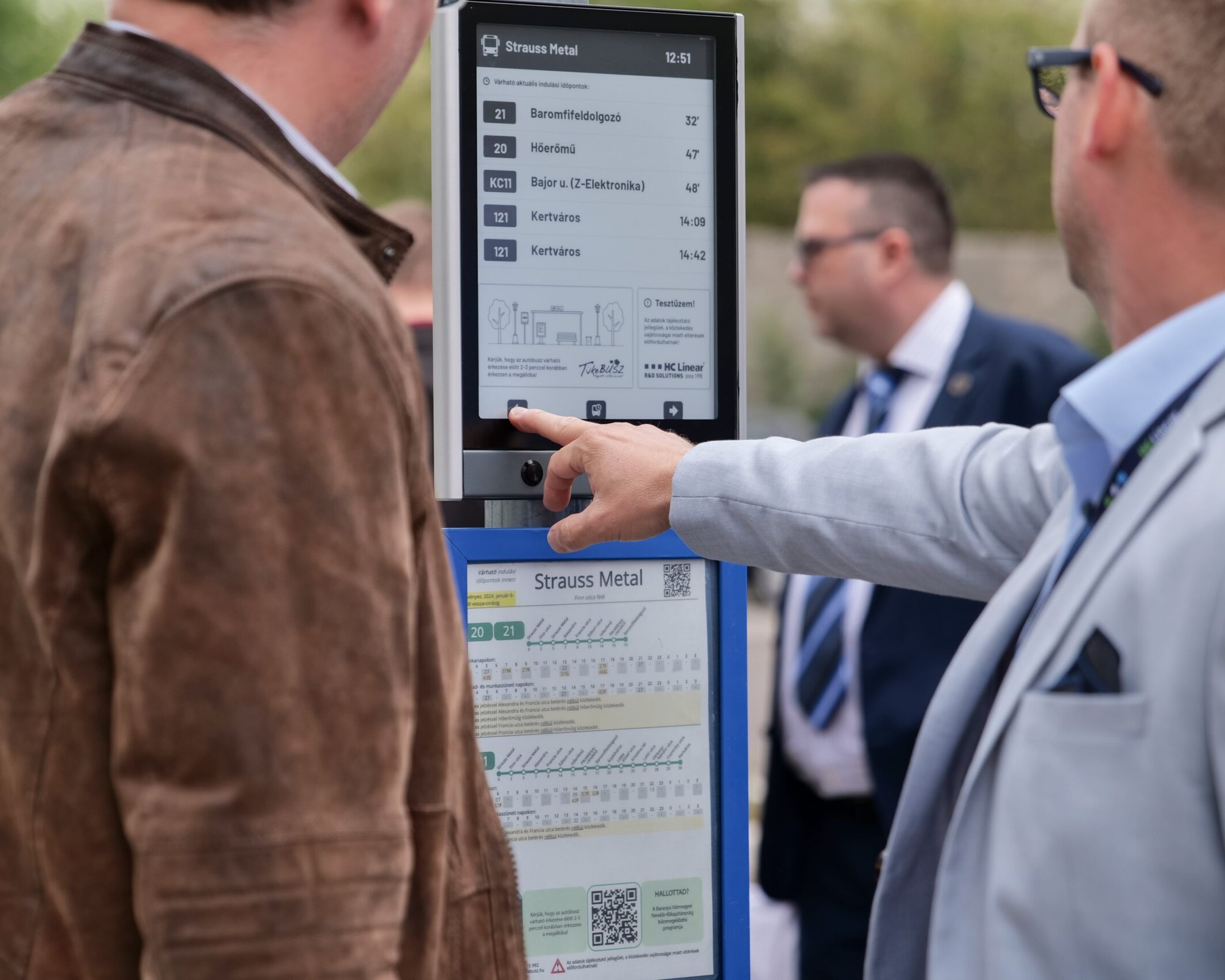
In public transport systems and industrial electronics, reliable, long-term performance is not just an advantage, it is an expectation. Solutions must comply with strict industry standards, meet demanding operational requirements, and adapt to continuous technological change.
In this environment, engineering expertise or manufacturing capacity alone is not enough. What truly sets a company apart is its ability to maintain full control over the entire process, from design and development to manufacturing and implementation.
Engineering or Manufacturing?
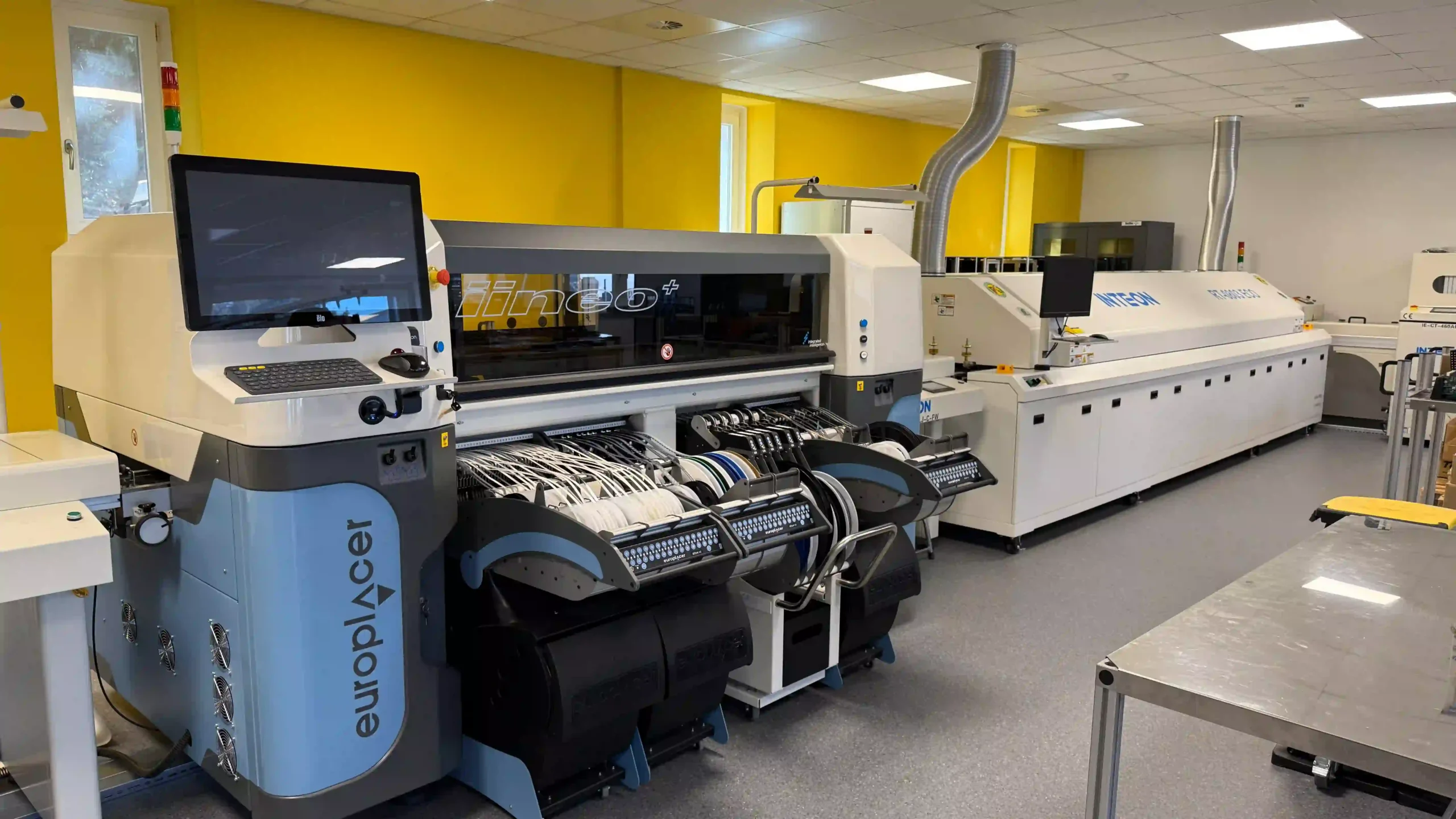
Many technology companies choose to outsource manufacturing while keeping engineering and product development in-house. Although this may seem efficient in the short term, it often leads to slower response times, more coordination, and increased project risks. As a result, a gap emerges between engineering decisions and manufacturing realities.
With in-house manufacturing, that gap disappears. Engineers gain immediate insight into how their decisions affect production, while manufacturing feedback is quickly incorporated into the development process. This creates a continuous feedback loop that enables faster iterations, reduces errors, and results in more reliable, higher-quality systems.
Faster Innovation and Shorter Development Cycles
In-house manufacturing also significantly accelerates prototyping and testing. Design changes can be implemented in days rather than weeks, which is especially valuable for complex systems that require continuous refinement throughout the development process.
Manufacturing location also has a direct impact on quality. When production takes place in-house, manufacturing, quality control, and testing operate within a single, integrated process. This not only improves product quality but also provides complete traceability throughout the production lifecycle.
This level of control is particularly important for long-life systems, where traceability, maintenance, repairs, or product modifications may be required many years after deployment.
Long-Term Support
The benefits of in-house manufacturing extend well beyond production. By keeping system knowledge within the company, maintenance, software updates, hardware upgrades, and system expansions can be delivered more quickly and efficiently.
This not only streamlines ongoing support but also reduces operating costs and maximises system availability throughout the product lifecycle.
Ultimately, in-house manufacturing determines how much control a company has over the entire product lifecycle. Companies that keep engineering and manufacturing under one roof can respond faster, deliver more predictably, and build stronger, long-term partnerships with their customers.
For more than 35 years, HC Linear has operated on this principle. With in-house manufacturing, an experienced team of engineers and software developers, and expertise spanning design, development, manufacturing, system integration, commissioning, and operational support, we manage every stage of the project lifecycle under one roof.
Planning a new project? Contact us to discover how our end-to-end expertise can support your project from initial concept to long-term operation.