The Role of Public Transport in Building Sustainable Cities
Developing public transport is essential to building sustainable cities. The transport sector is responsible for nearly a quarter of global carbon emissions, making its modernisation a key part of achieving climate goals. Effective solutions are particularly important in urban areas, where a significant share of emissions comes from short journeys made by private cars. As a result, attractive and competitive public transport systems not only improve mobility but also make a valuable contribution to reducing environmental impact.
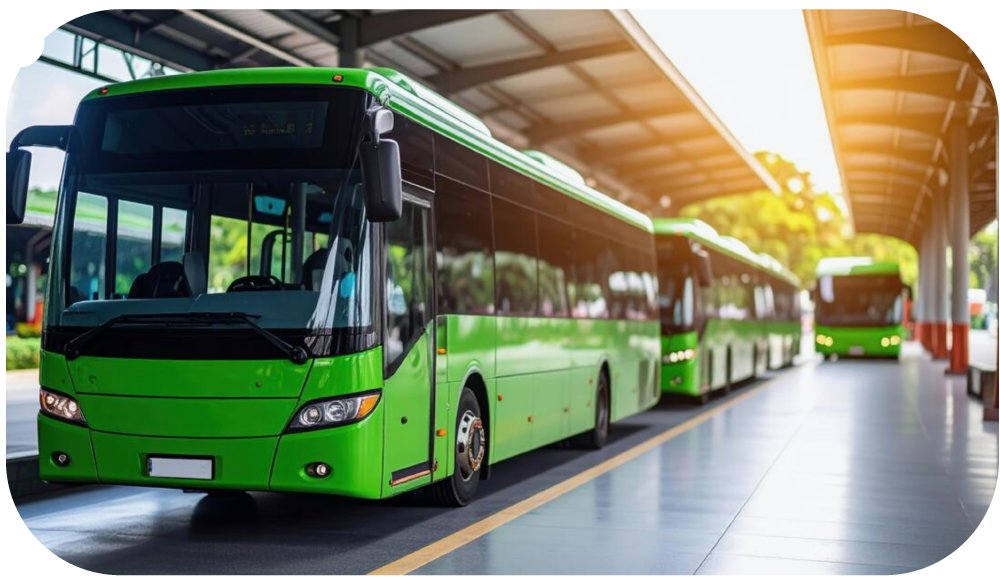
One of the most effective ways to cut emissions is to reduce reliance on private cars. International studies show that carbon emissions per passenger are significantly higher for private vehicles than for public transport. A fully occupied bus, for example, can replace dozens of cars on the road, helping to ease congestion and improve air quality.
Sustainability Requires More Than Additional Services
Research shows that people do not choose how they travel based solely on environmental considerations. Public transport becomes a genuine alternative to driving when it offers a reliable, predictable and comfortable travel experience.
Real-time passenger information plays a crucial role in making this possible. Accurate and up-to-date information reduces uncertainty, improves the passenger experience and helps build trust in the service. Replacing outdated, paper-based information systems with modern digital solutions can significantly increase passenger satisfaction and make public transport more attractive.
Improving public transport therefore involves more than introducing new vehicles or increasing service frequency. It also means enhancing the overall passenger experience. Digital passenger information solutions give travellers quick and easy access to the information they need, making journeys smoother and more convenient.
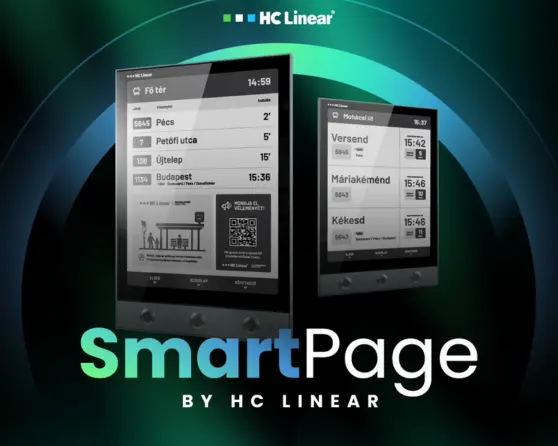
As a Hungarian-owned research, development and manufacturing company, HC Linear provides comprehensive passenger information systems for vehicles, stations and stops. Our latest innovation, SmartPage, reflects this approach. Its e-paper displays provide real-time passenger information while consuming very little energy. Combined with solar power and a long service life, the system supports sustainability goals while delivering practical benefits for both passengers and transport operators. The result is a solution that is not only modern and informative, but also environmentally friendly and cost-effective.
The Future of Mobility Is Multimodal
One of the biggest challenges facing public transport is the so-called first-mile/last-mile issue – ensuring convenient connections at the beginning and end of a journey. When a stop or station is difficult to access, many people choose to make the entire trip by car instead.
Multimodal mobility offers a solution by integrating public transport with micromobility options such as bicycles and e-scooters. The goal is not for one mode of transport to replace another, but for passengers to be able to combine different mobility options into a single, seamless journey.
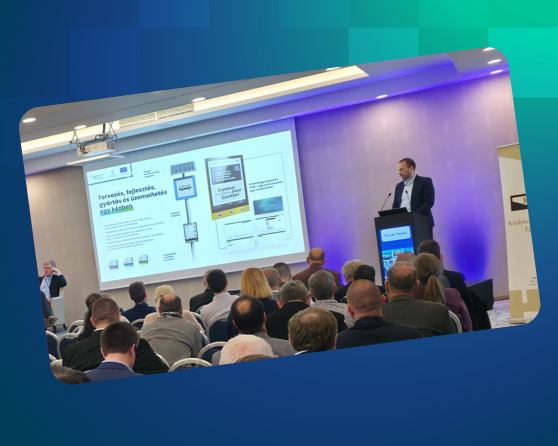
As part of the Horizon Europe-funded metaCCAZE project, HC Linear is working alongside the Budapest University of Technology and Economics and MVK Zrt. to develop innovative solutions that bring public transport and micromobility services closer together. The aim is to create a mobility ecosystem that makes urban travel simpler, more convenient and more sustainable.
The transport systems of the future will not be built around a single mode of travel. Instead, future cities will depend on intelligent, connected and sustainable mobility networks that make getting around easier, more efficient and more environmentally responsible.