InnoTrans 2026
InnoTrans 2026 – The Digital Future of Transportation
InnoTrans 2026 has come to an end in Berlin, where the latest technologies and key development trends shaping the transport industry took centre stage over four days. Celebrating its 30th anniversary, the trade fair once again demonstrated how rapidly the world of mobility is evolving and the growing role digitalisation plays in this transformation.
The scale of this year’s event alone reflects the international significance of the industry. A total of 3,190 exhibitors from 59 countries gathered in Berlin. The exhibition covered 42 halls and around 200,000 square metres, attracting a record number of nearly 175,000 trade visitors.
In this article, we look back at the key takeaways from InnoTrans 2026 and explore the technological trends that are expected to shape the future of transport in the years ahead.
Digitalisation is now an integral part of transport
One of the strongest messages of the exhibition was that digitalisation is no longer a promise of the future, but already an integral part of today’s transport systems. Artificial intelligence, automation and robotics are increasingly being used in practical applications, from maintenance and inspection to supporting day-to-day operations.
This year’s InnoTrans featured 180 world premieres, highlighting just how quickly new technologies are moving from development into practical applications.
Connected systems in public transport
The pace of development is particularly evident in public transport, where, alongside vehicles and infrastructure, the digital systems operating behind the scenes are becoming increasingly important. These systems collect and transmit data, turning it into useful information that supports more efficient and connected transport services.
Intelligent passenger information, digital ticketing, accessible navigation, automated transport solutions and data-driven operations are therefore increasingly working together as part of a connected system.
Innovation and reliability
As technology continues to advance, so do expectations. Transport systems need to be not only intelligent, but also reliable, safe and energy-efficient. Sustainability was therefore one of the key themes at InnoTrans, with solutions ranging from energy-efficient technologies and alternative propulsion systems to more sustainable long-term operations.
At HC Linear, we share this approach. We develop and manufacture electronics, hardware and software in-house and combine them with system integration to create complex transport IT solutions that are built not only on advanced technologies, but also on reliable day-to-day operation. With 35 years of R&D experience, we work to ensure that our solutions perform reliably in real-world applications and deliver long-term value.

InnoTrans Guide
A Visitor’s Guide to InnoTrans
InnoTrans is one of the world’s leading trade fairs for the transport industry, bringing together companies, technologies and experts from across the mobility sector. With so much to see and so many people to meet, a little planning can make a big difference, especially if this is your first visit.
The scale of the event speaks for itself. InnoTrans 2024 brought together 2,946 exhibitors, including HC Linear, and 169,214 visitors from 128 countries. The 2026 edition will once again fill all 42 halls at Messe Berlin, covering around 200,000 m² of exhibition space. With four days to explore the show, seeing everything simply isn’t realistic. The key is knowing what you want to get out of your visit.
How to make the most of your first InnoTrans
1. Get familiar with the venue
InnoTrans 2026 takes place from 22 to 25 September at Messe Berlin (Messedamm 22, 14055 Berlin).
The show is divided into five main segments covering Railway Technology, Railway Infrastructure, Public Transport, Interiors and Tunnel Construction. Alongside the indoor exhibition, the Outdoor and Rail Display is one of InnoTrans’ highlights. Across 3,500 metres of track, you can see a wide range of rail vehicles up close. The Bus Display and Demonstration Course also gives bus manufacturers the opportunity to showcase their vehicles.
2. Plan your visit and leave room for the unexpected
Start by thinking about what you want to achieve. Are you looking for a specific technology, potential suppliers or new business partners? Make a shortlist of the companies you don’t want to miss.
The InnoTrans Plus web platform and mobile app make it easy to explore exhibitors ahead of the show, save the companies you are interested in and plan your route around the halls.
At the same time, don’t over-schedule yourself. Some of the most valuable conversations can happen unexpectedly, so leave room for discovering new technologies, meeting new people and having conversations that go beyond your original plan.
3. Make getting around Berlin easy
Your valid InnoTrans admission ticket includes free public transport within Berlin’s ABC fare zones for the duration of your ticket’s validity.
Messe Berlin is well connected by U-Bahn and S-Bahn. For Messe Nord and Palais Berlin, take the U2 to Theodor-Heuss-Platz or the S41, S42 or S46 to Messe Nord/ZOB. For Messe Süd, CityCube and hub27, take the S3 or S9 to Messe Süd.
Before you set off, check the latest routes, travel times and ticket information with VBB, BVG or Deutsche Bahn.
4. Book the meetings that matter
If there are exhibitors or potential partners you definitely want to meet, arrange your meetings before you arrive. The InnoTrans Plus platform makes it easy to connect with exhibitors and schedule meetings in advance.
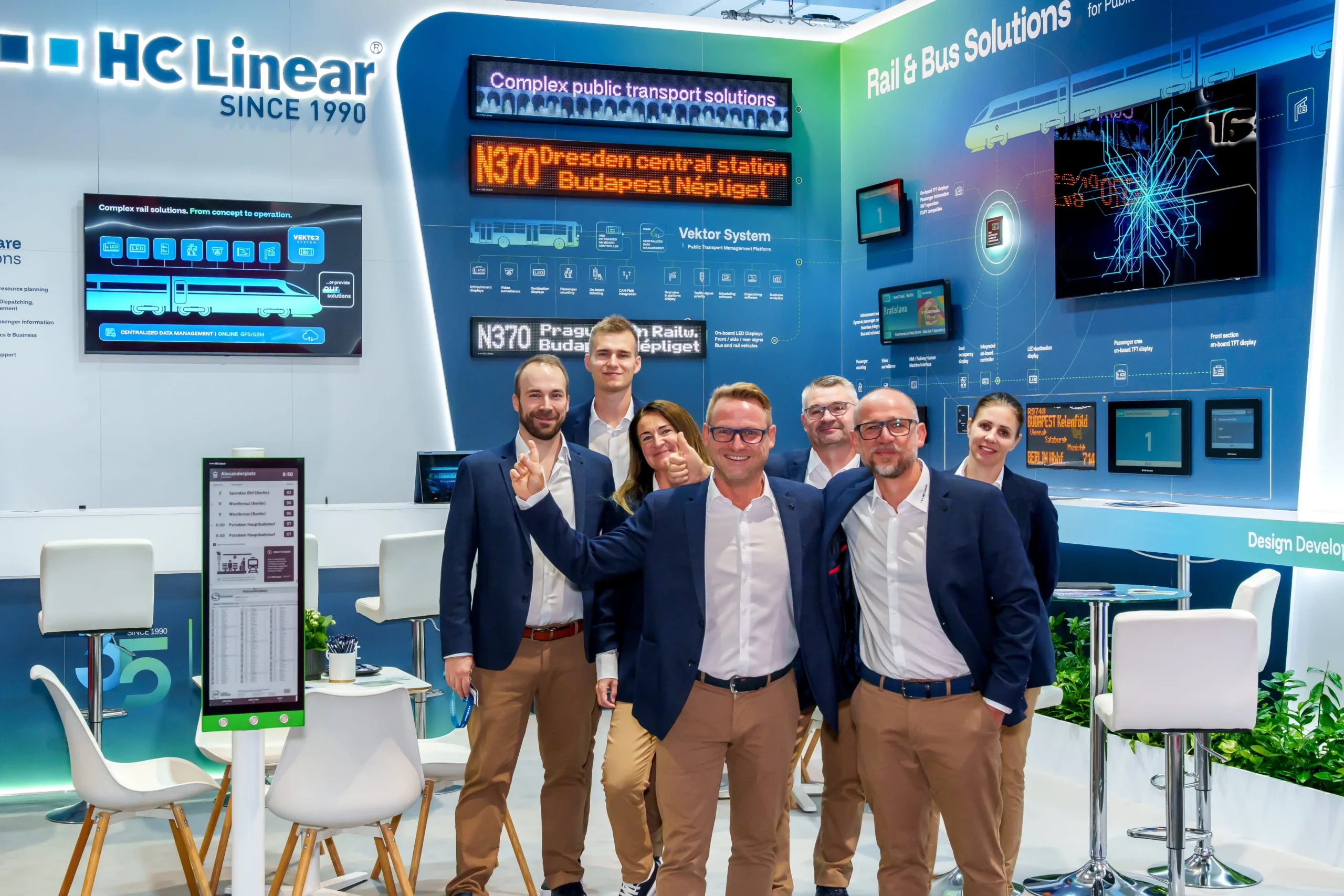
You’ll find the HC Linear team at Hall 4.1, Stand 270. With more than 35 years of experience in transport informatics and technology development, we combine our own in-house hardware, software and electronics development and manufacturing capabilities to deliver complex solutions from concept and development through to production.
Whether you are exploring a new project, looking for a technology partner or simply want to learn more about what we do, come and talk to us in Berlin.
Book a meeting with our team at , or find us in the InnoTrans Plus app.
InnoTrans 2026
Europe's Leading Trade Fair for Transport Technology
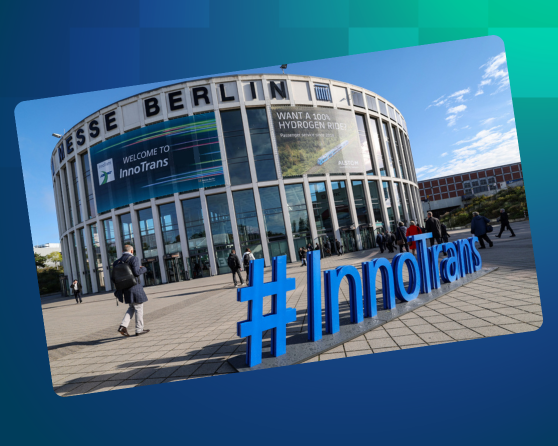
InnoTrans 2026 will take place from 22-25 September at Messe Berlin, bringing together the global rail and public transport industry for four days of innovation, networking and knowledge sharing. As the world’s leading transport technology exhibition, the event welcomes railway operators, public transport authorities, manufacturers, technology providers and mobility experts from around the world.
What to Expect at InnoTrans 2026
The exhibition covers every aspect of modern mobility, from railway technology, railway infrastructure and public transport to passenger information systems, digital infrastructure, automation, Intelligent Transport Systems (ITS) and sustainable mobility. Visitors can also explore the renowned Outdoor Display, featuring rail vehicles on more than 3.5 kilometres of track, the dedicated Bus Display, and the InnoTrans Convention, where industry leaders share insights into the future of transport and mobility.
Among the many international exhibitors, HC Linear will present technologies that support the digital transformation of public transport, including passenger information systems, transport software and data-driven operational solutions.
Meet HC Linear at InnoTrans 2026
If you’re visiting InnoTrans 2026 at Messe Berlin, we’d be delighted to welcome you to Hall 4.1, Stand 270.
Discover our latest developments in passenger information systems and transport software, and meet the team behind our public transport technologies. Whether you’re looking for new ideas, technology partners or practical solutions, we’d be pleased to discuss your projects and share our expertise.
We look forward to welcoming partners, transport operators, public authorities and mobility professionals from around the world to Berlin.
TRA BUDAPEST 2026
HC Linear at TRA 2026
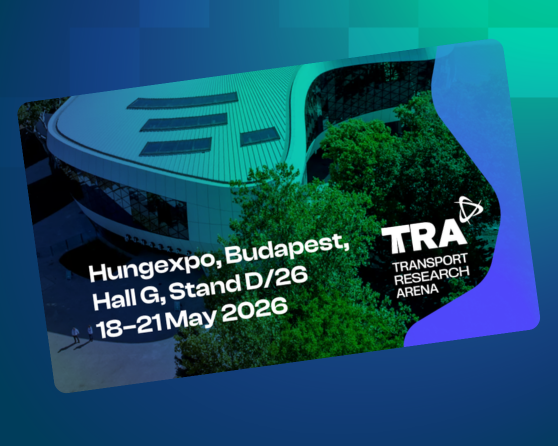
The Transport Research Arena (TRA) is one of Europe’s leading transport technology exhibitions and conferences, taking place in Budapest from May 18–21, 2026.

With more than 35 years of experience in transport electronics manufacturing and R&D, HC Linear delivers reliable and energy-efficient technologies designed for smart public transport systems and next-generation mobility solutions.
Visit us at HUNGEXPO Budapest, Hall G, Stand D/26.
As public transportation continues to evolve through digitalization and intelligent transportation systems (ITS), reliable passenger communication and durable transport electronics have become more important than ever.
TRA 2026 provides the perfect opportunity to connect with transport operators, vehicle manufacturers, system integrators, and mobility technology partners from across Europe and beyond.
Looking for a reliable technology partner?
Meet HC Linear at TRA 2026 in Budapest and discover our latest smart public transport solutions.
BUS2BUS 2026
BUS2BUS 2026 – Awards and Industry Trends
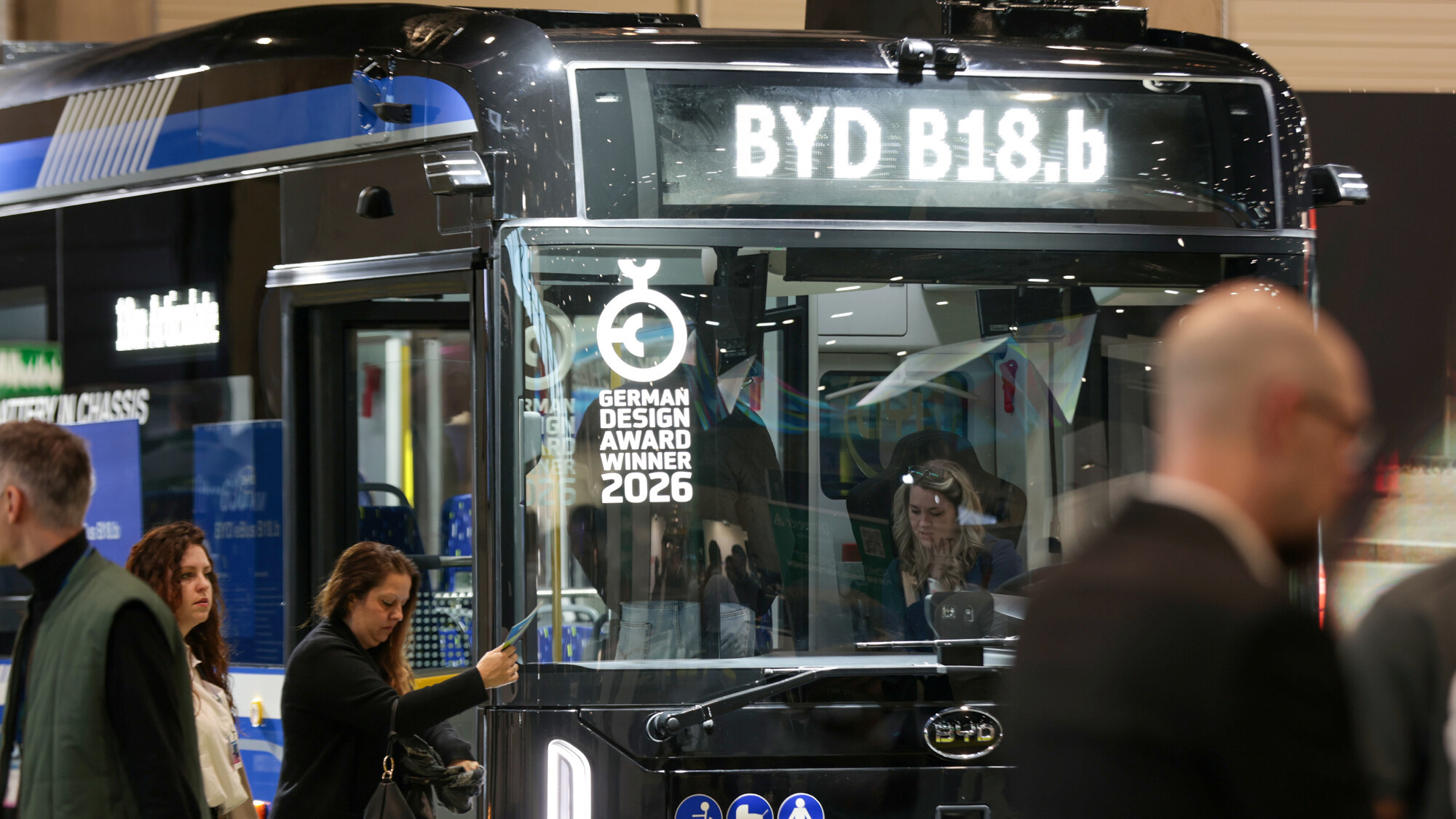
BUS2BUS 2026 took place in Berlin on April 15–16, bringing together 156 exhibitors and several thousand industry professionals. The event focused on the key trends shaping sustainable and digital mobility, including electric and hydrogen-powered buses, intelligent charging infrastructure, and digital fleet management systems.
Innovations Shaping the Industry
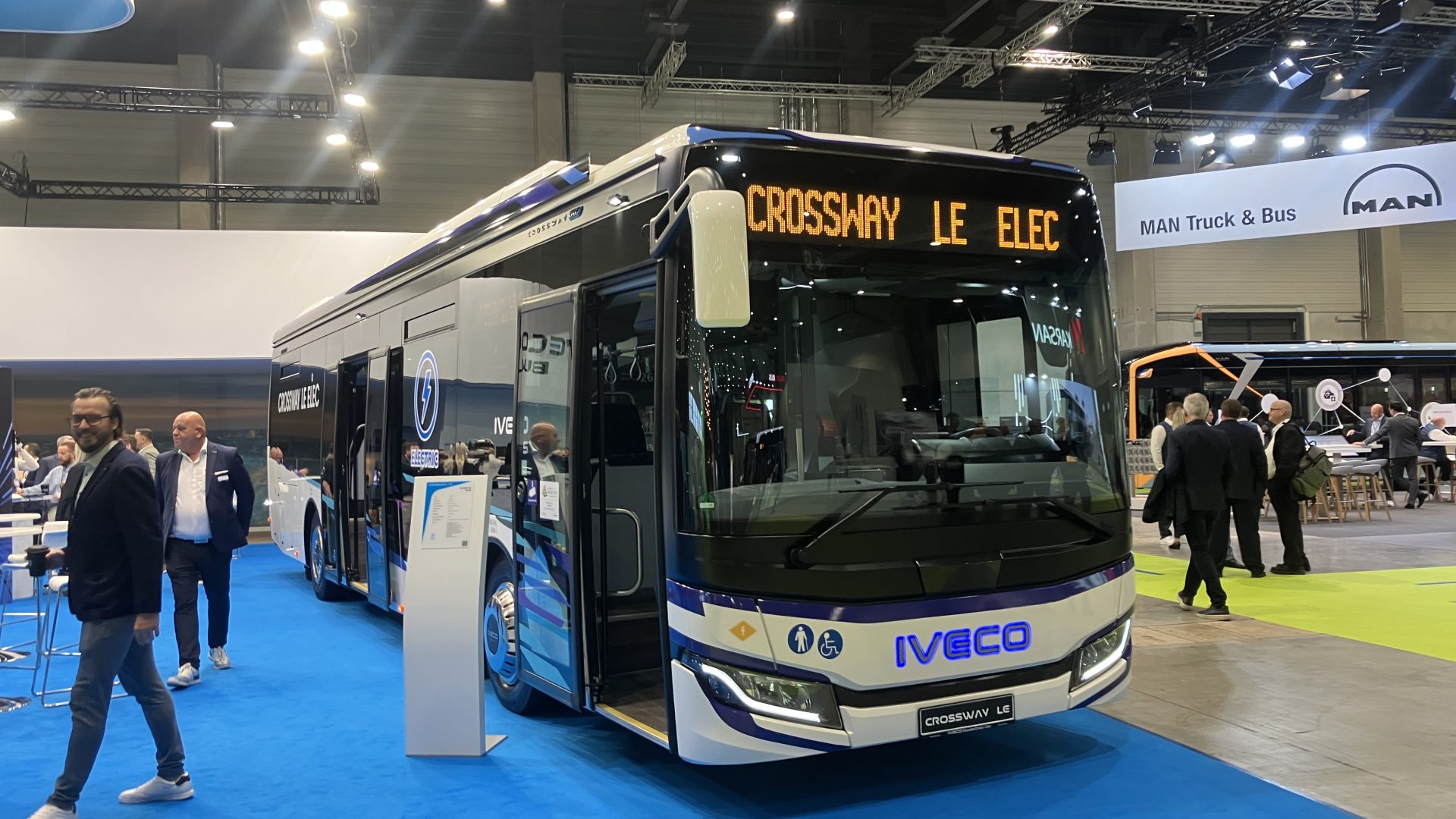
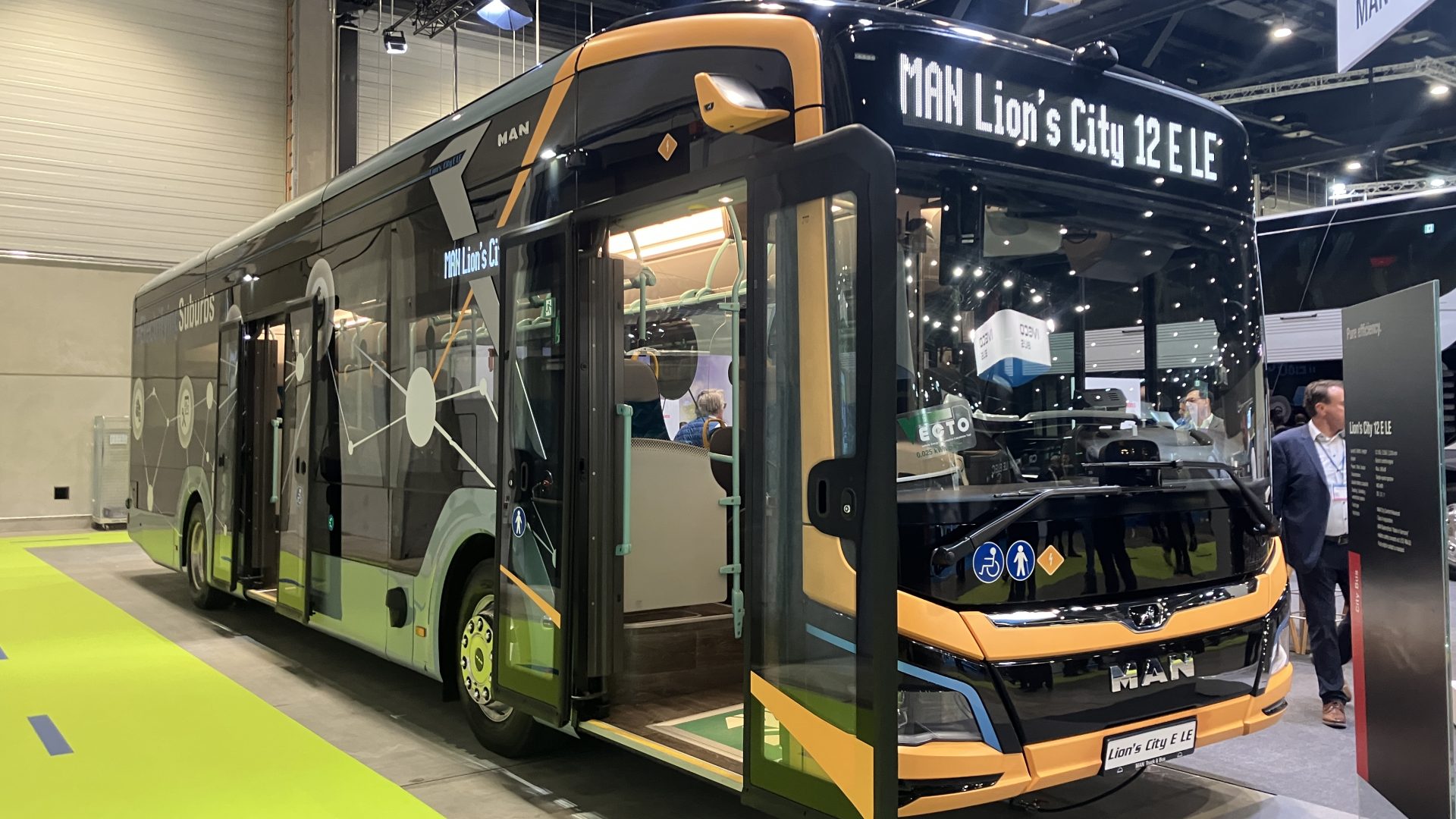
At one of the key highlights of BUS2BUS, the busplaner Sustainability Awards, innovative and sustainable solutions were recognised across 12 categories. The awarded entries included developments in electric buses, intelligent vehicle components and digital systems. Among the winners were leading players in the bus industry, such as the IVECO CROSSWAY Low Entry ELEC and MAN’s Lion’s Coach E solution.
Additional innovations were recognised at the Future Night event. The Fresh Travel Award was presented to Neomind for its Universal Bus concept, while the Startup Award went to Winduction for its wireless charging technology.
Electrification
The showcased trends are also supported by industry data. The European bus market is on a growth trajectory, particularly in the field of electric vehicles. The rapid expansion of battery-electric buses clearly signals the direction forward for operators and manufacturers alike.
Conclusion
The future of bus transport lies in integrated, intelligent systems. Solutions that enhance efficiency while also improving transparency and the passenger experience are gaining increasing importance. HC Linear aims to deliver real added value in this transition by supporting its partners in implementing future-proof mobility solutions.
Embedded World 2026
Where Are Embedded Systems Headed?
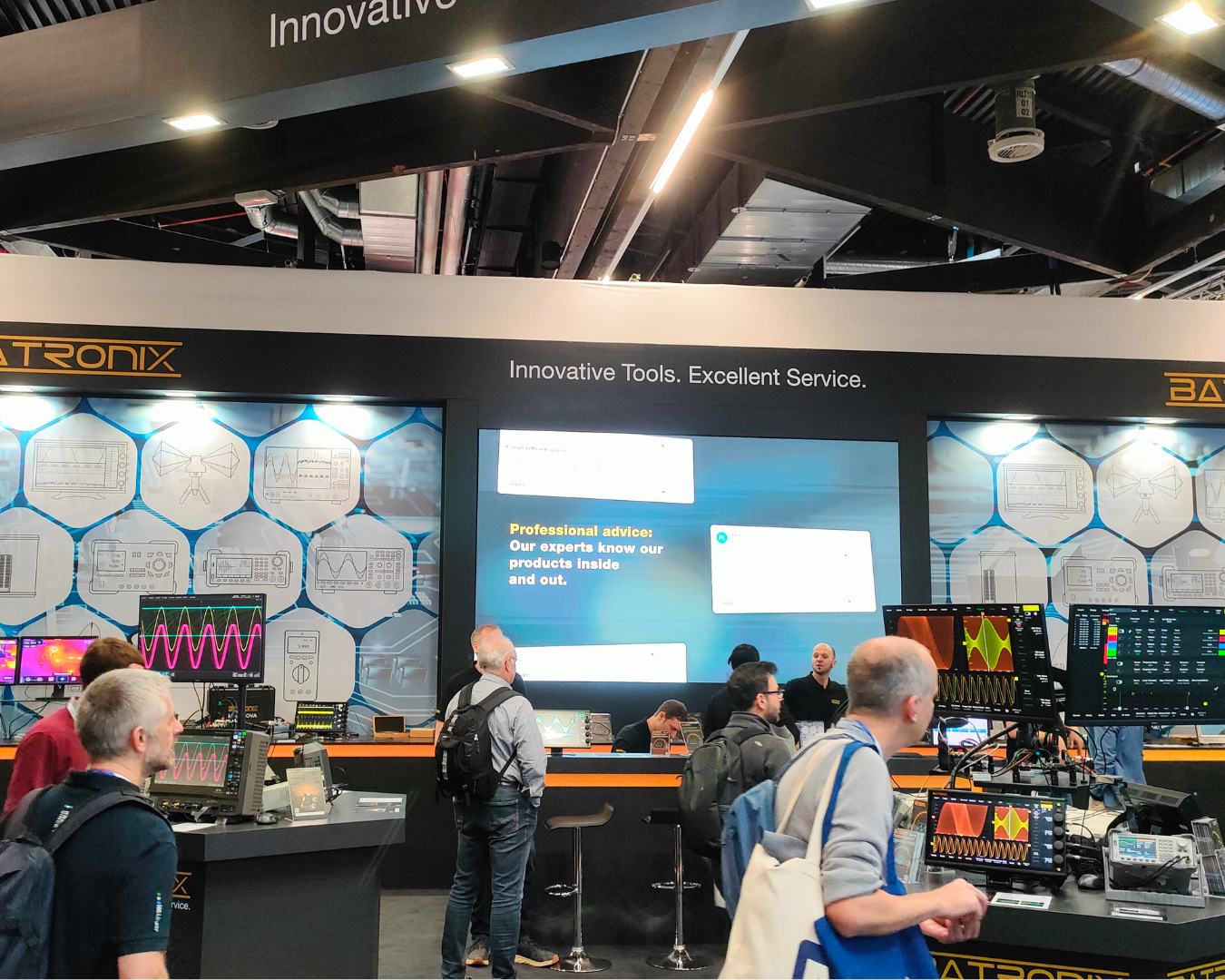
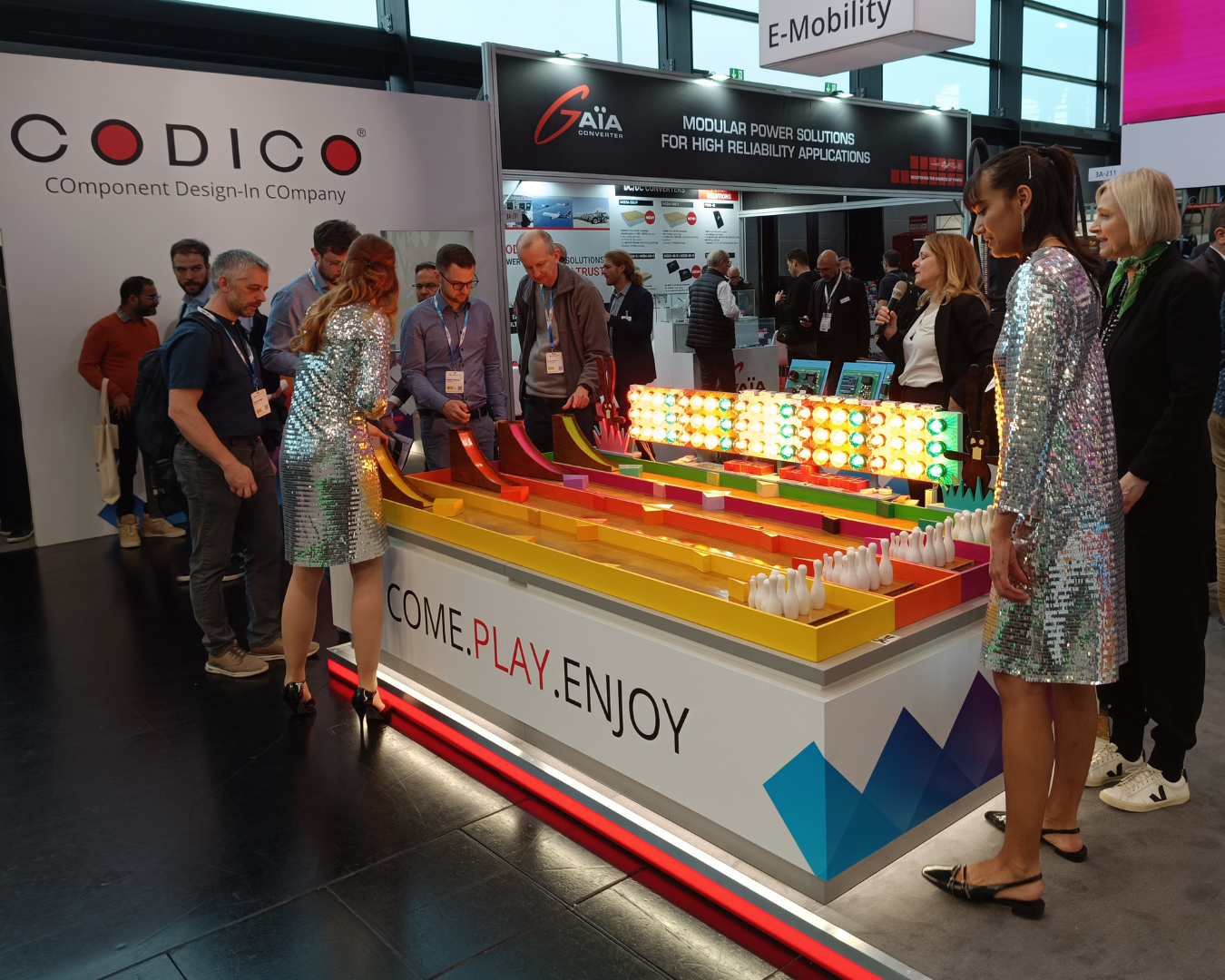
The evolution of embedded technology continues to reshape established boundaries. This shift was particularly evident at Embedded World 2026 in Nuremberg, where our team spent three days exploring the latest industry developments and gaining a comprehensive view of where the market is heading.
New Perspectives
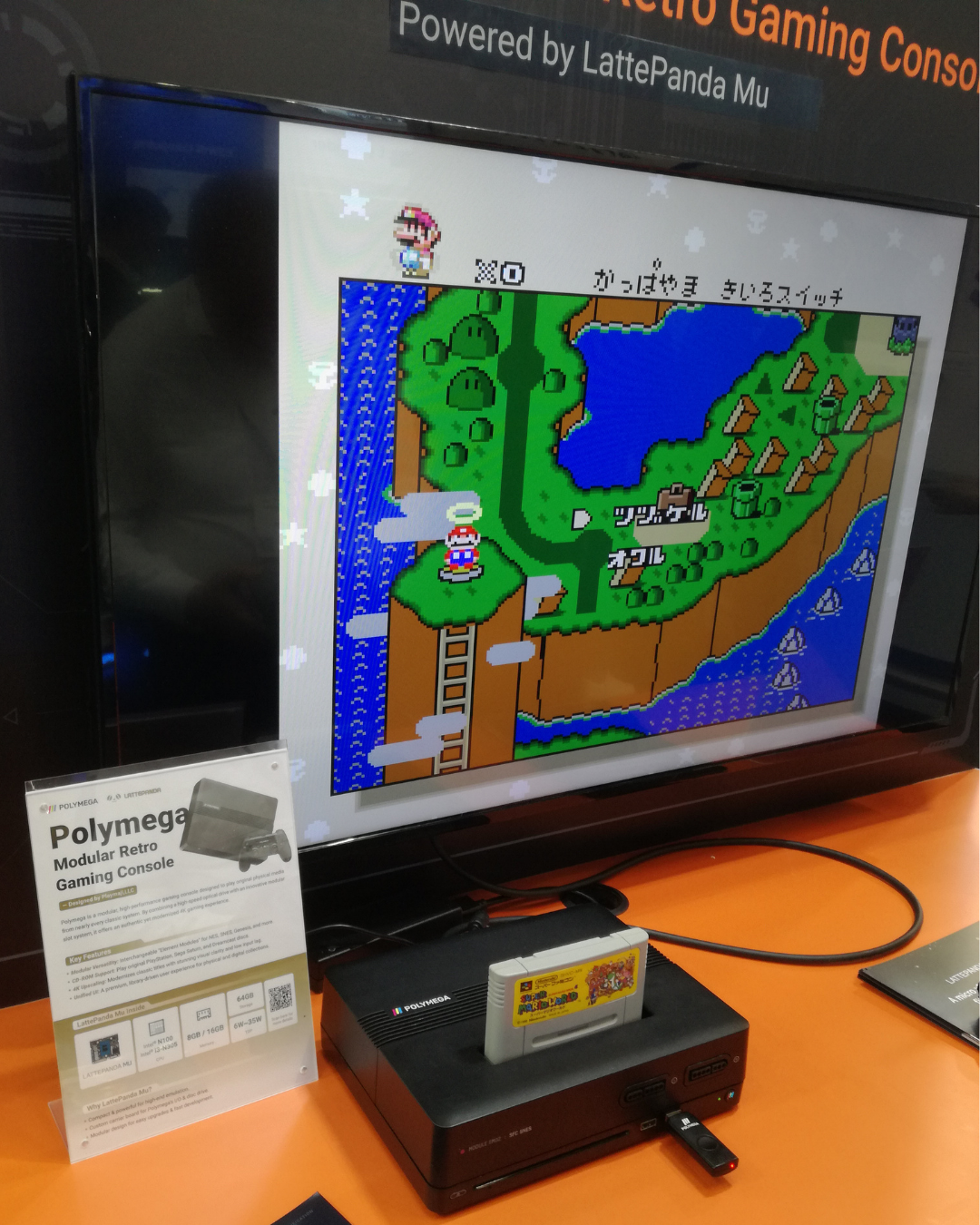
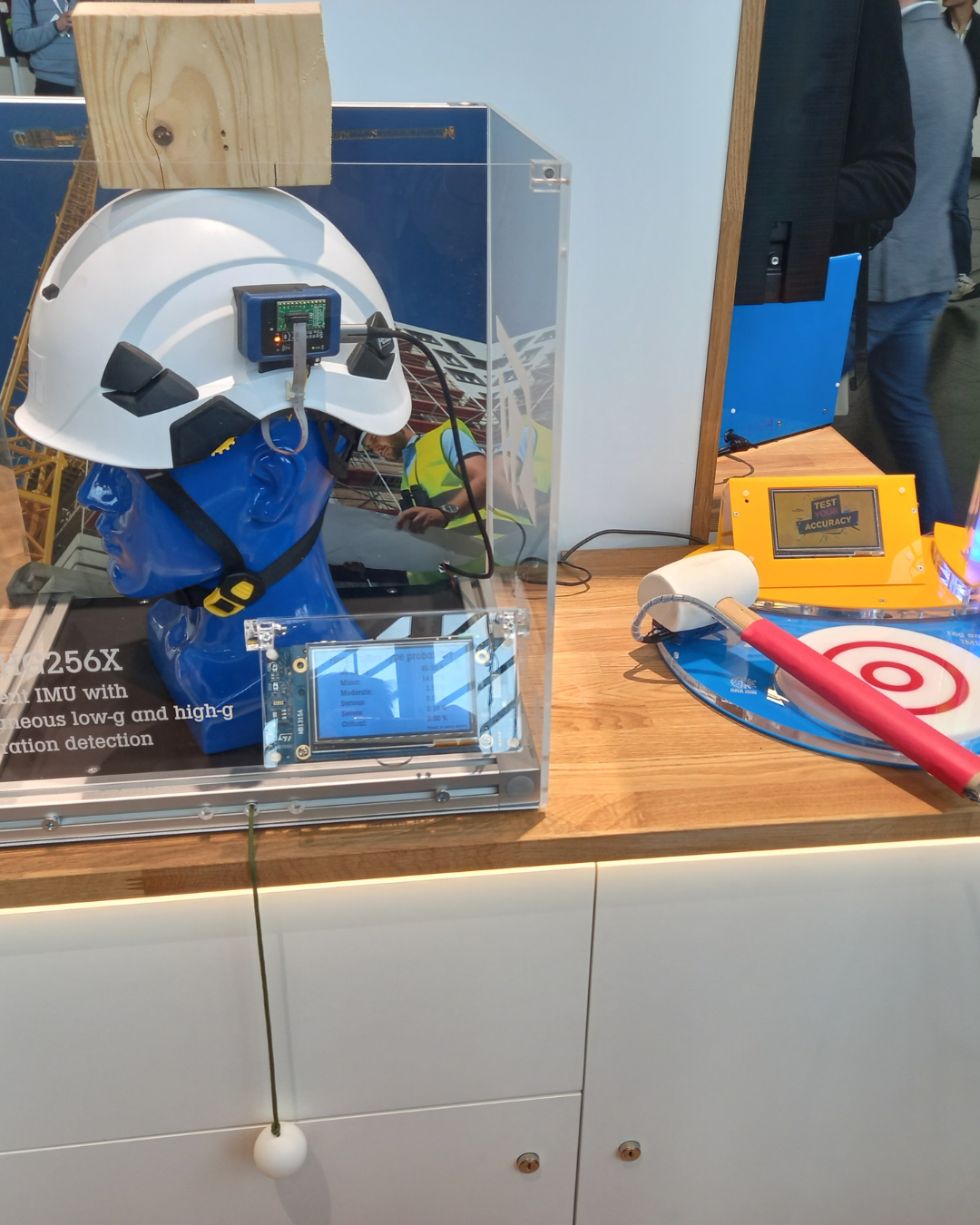
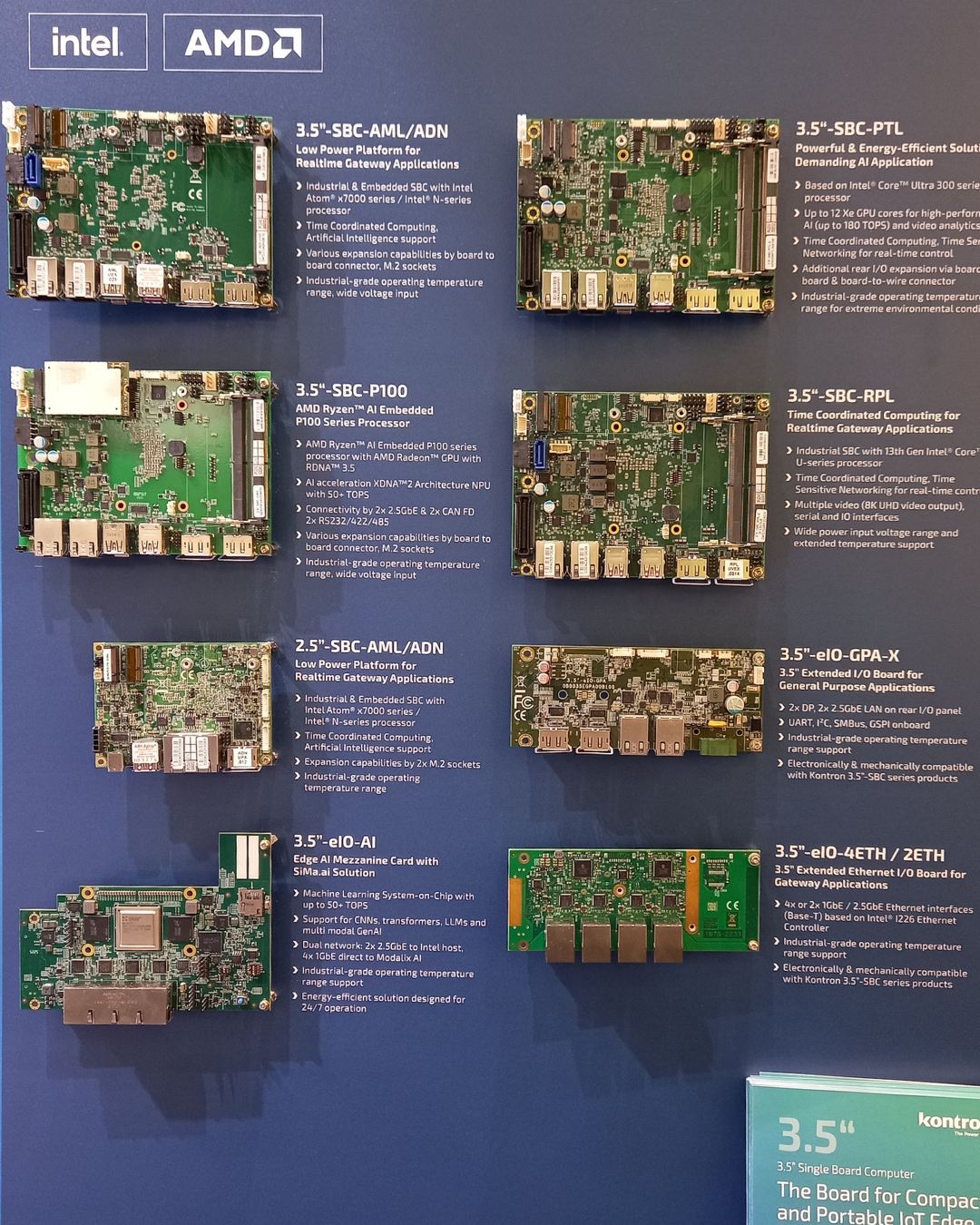
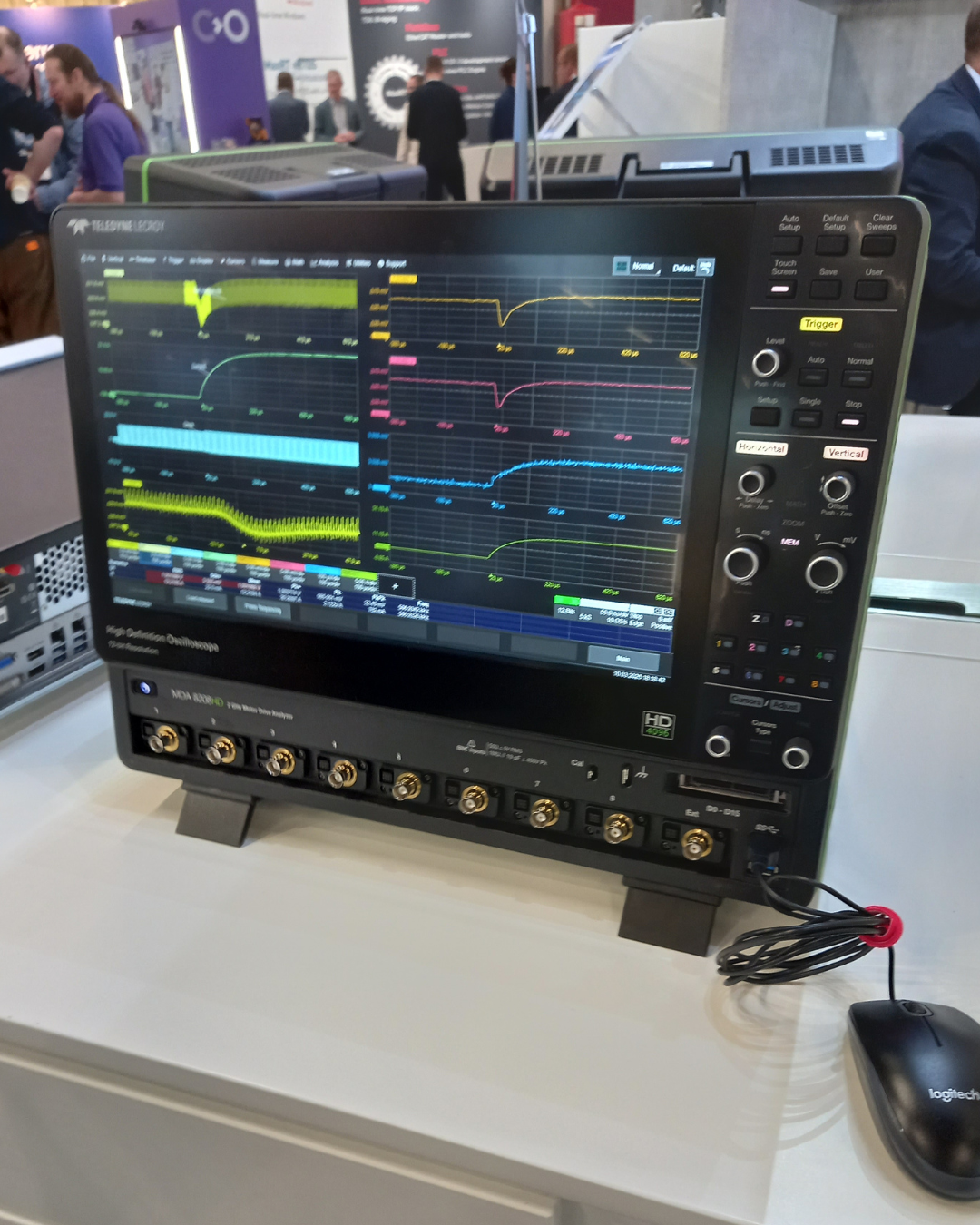
While our visit followed a carefully structured professional agenda, some of the most valuable insights came from beyond the planned meetings. This is one of the exhibition’s greatest strengths. Even when you arrive with clear objectives, you inevitably encounter solutions that challenge your assumptions and open up new perspectives for everyday development work. In the following, we present a selection of these insights.

Rigid-Flex vs. Semi-Flex in Practice
Rigid-flex PCBs remain the go-to solution when circuits need to conform to complex geometries. Their key advantage lies in their ability to withstand repeated bending while supporting tight bend radii. In addition, eliminating bulky connectors enables more compact designs.
However, our experience at the exhibition reinforced a well-known trade-off. Rigid-flex designs typically require custom stack-ups, which increases both manufacturing complexity and cost.
Semi-flex solutions, on the other hand, offer a compelling middle ground. These designs use standard FR4 material in a thinned configuration, allowing for limited bending. While they are not suitable for dynamic flexing, they are ideal for shaping during assembly. Thanks to fixed layer stack-ups and the possibility of pooled manufacturing, semi-flex PCBs can be a highly cost-effective option, especially for small to medium production runs.
This contrast clearly highlights a fundamental principle. Selecting the right technology always depends on the specific application environment.
Open Toolchains in the FPGA Ecosystem
The FPGA landscape is still largely dominated by closed ecosystems, but we are starting to see meaningful shifts. Some emerging players are actively working to change this.
For example, Cologne Chip offers FPGA solutions supported by open-source toolchains. This represents a significant step forward for companies looking to reduce vendor lock-in or gain greater control over their development workflows.
At the same time, FPGA-based System-on-Module solutions continue to play a key role, particularly in simplifying integration for complex systems.
System-in-Package: When Space Is Critical
System-in-Package solutions are increasingly positioning themselves as an alternative to traditional System-on-Module architectures. Their primary advantage is compactness, which is an essential factor in applications where every square millimeter counts.
This level of integration, however, comes with added complexity. BGA packaging increases both design and manufacturing challenges and requires higher engineering expertise as well as more precise production technologies.
System-in-Package is a clear example of a broader industry trend. Miniaturization often goes hand in hand with increased complexity.
Rethinking Touch Interfaces
One of the most interesting developments we observed was in the field of human-machine interfaces. Several manufacturers showcased solutions that combine the flexibility of touchscreens with the tactile feedback of mechanical controls.
The concept is simple and effective. Mechanical elements such as buttons or rotary knobs are mounted on the surface of a touchscreen and physically actuate it. This approach delivers tangible feedback without requiring additional electrical integration.
The result is reduced system complexity and a significantly improved user experience. This can be particularly valuable in environments where reliable feedback is critical, such as industrial control interfaces.
At the same time, haptic feedback technologies are reaching new levels of maturity, with some solutions now convincingly replicating the feel of mechanical switches.
Based on what we saw at Embedded World 2026, engineering decisions are increasingly made at system level. PCB technology, integration approach and interface design are no longer separate topics but tightly linked choices that directly impact performance and manufacturability. The challenge is not access to new technologies, but using them in a way that fits the actual application.
Busworld Europe
Let’s Meet in Belgium — Heading to Busworld Europe 2025!
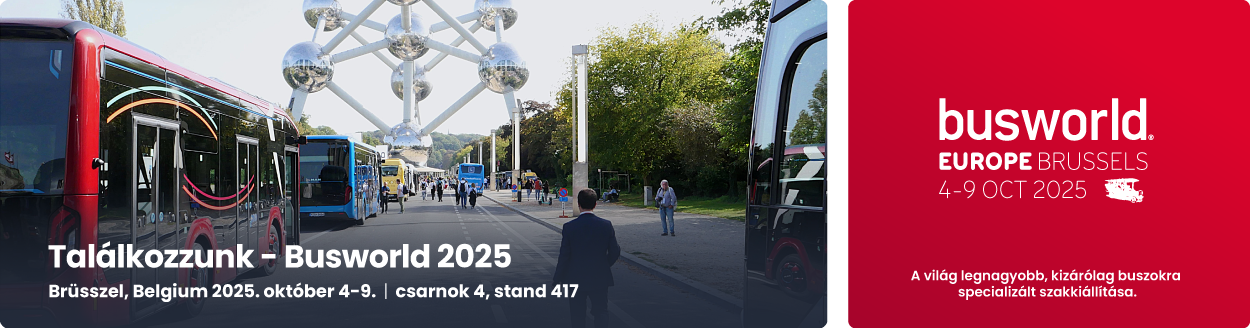
In October 2025, Brussels will host the world’s largest and most influential bus industry event, Busworld Europe 2025. During the event, from October 4th to 9th, we invite professionals interested in public transportation, vehicle manufacturing, and mobility technologies to visit the HC Linear exhibition stand — including you.
What Awaits the Attendees?
This year, Busworld Europe will focus on sustainable mobility solutions, the latest digital innovations, and future transportation trends, featuring over 500 exhibitors showcasing transport technology solutions from around the globe.
We Look Forward to Welcoming You at Our Stand!
HC Linear awaits visitors at Hall 4, Stand 417. We will showcase our latest products, services, and technological innovations. This exceptional opportunity offers a chance for personal meetings with our partners, clients, and industry decision-makers.
If you have any questions or would like to pre-register for the event, please feel free to contact us at
. We offer our partners free admission to the event—please reach out to our colleagues for a voucher code!
Follow Us!
For more information about the exhibition and live updates, follow and stay tuned to our social media channels:
We look forward to welcoming you and your colleagues in October in Berlin at Busworld Europe 2025 — where the future of transportation begins!
InnoElectro 2025
A professional overview of the InnoElectro 2025 exhibition
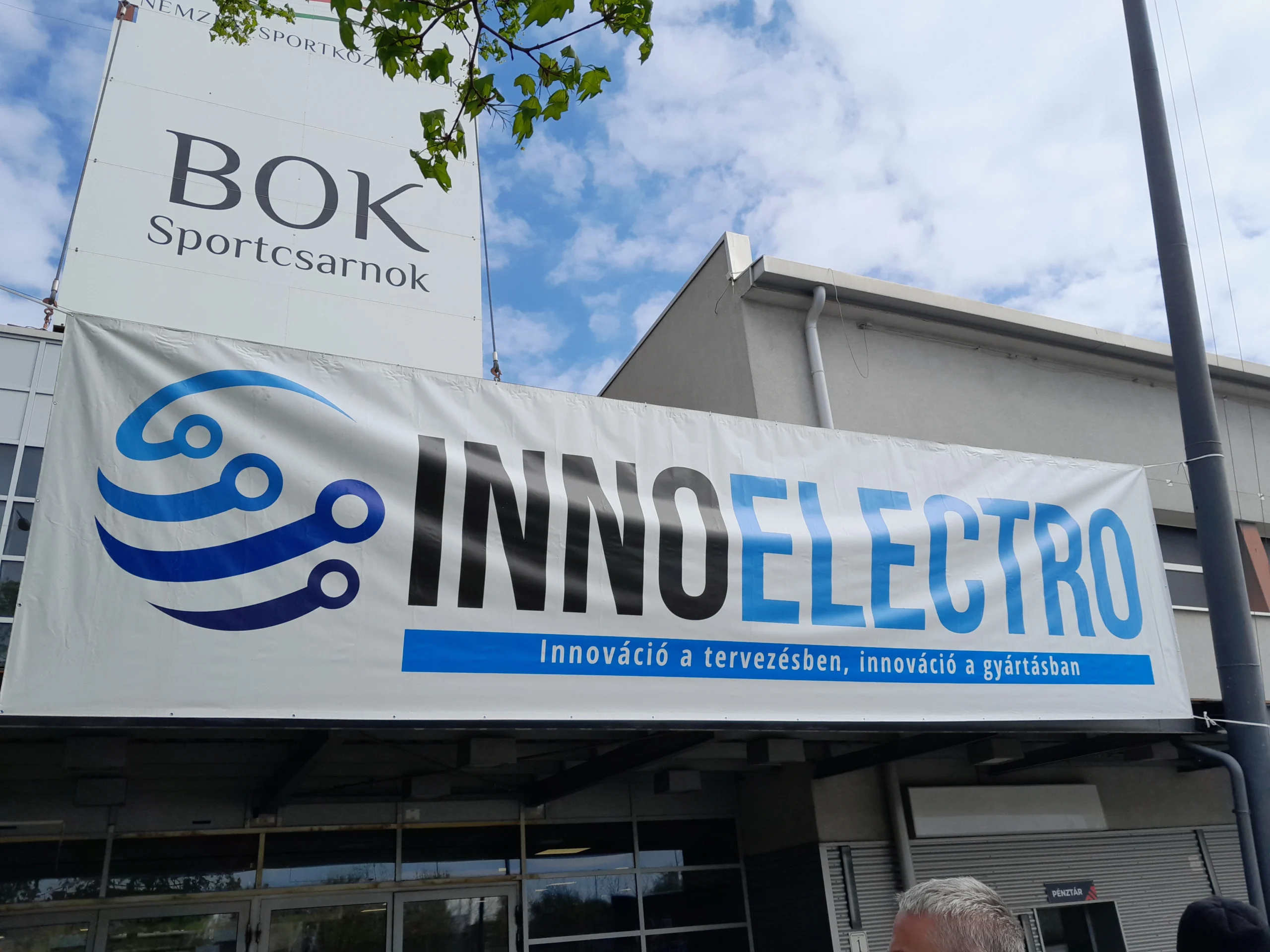
Every year InnoElectro is an important meeting point for the electronics industry. This year again, many manufacturers and distributors presented their latest developments, from PCB manufacturing and testing to automation and robotics solutions.
Below is a brief summary of the main technological trends and types of tools that have been highlighted this year.
Experience, technologies, trends
AOI systems: 2D or 3D?
There are still two main solutions for automatic optical inspection (AOI) on the market: 2D and 3D systems. 3D AOI equipment is capable of providing a perspective view of the PCB under inspection, but many manufacturers stress that 2D mode remains important for detailed inspection of solder defects.
Alternative soldering solutions
Several exhibitors presented automated soldering units that use a soldering iron head and solder wire dispenser moving on an X-Y-Z axis. These devices perform soldering one at a time, similar to manual soldering, but work at a steady and fast pace. They have the advantage of not requiring flux spray and allow for denser part layouts.
The role of artificial intelligence in design
The conference section of the exhibition also featured a number of interesting presentations, including on the role of artificial intelligence in PCB and hardware design. It was concluded that AI can currently mainly make suggestions based on previous designs, but that their final adoption and integration remains an engineering responsibility.
The presence of young talent
The exhibition was also an opportunity for young engineers and university students to showcase their own developments. BME students, for example, presented their rocket project “Prometheus“, which has been successfully competing in international competitions.
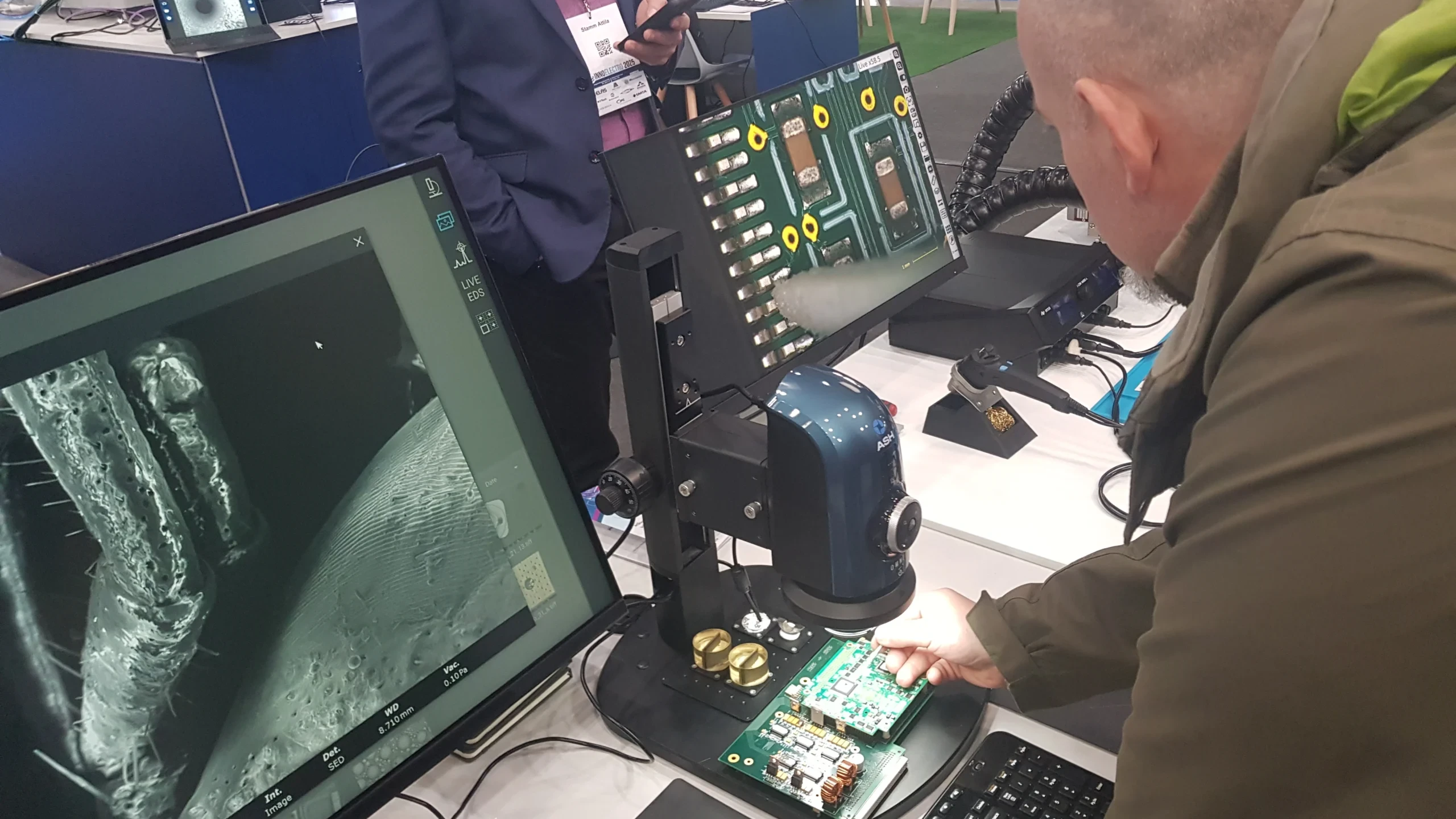
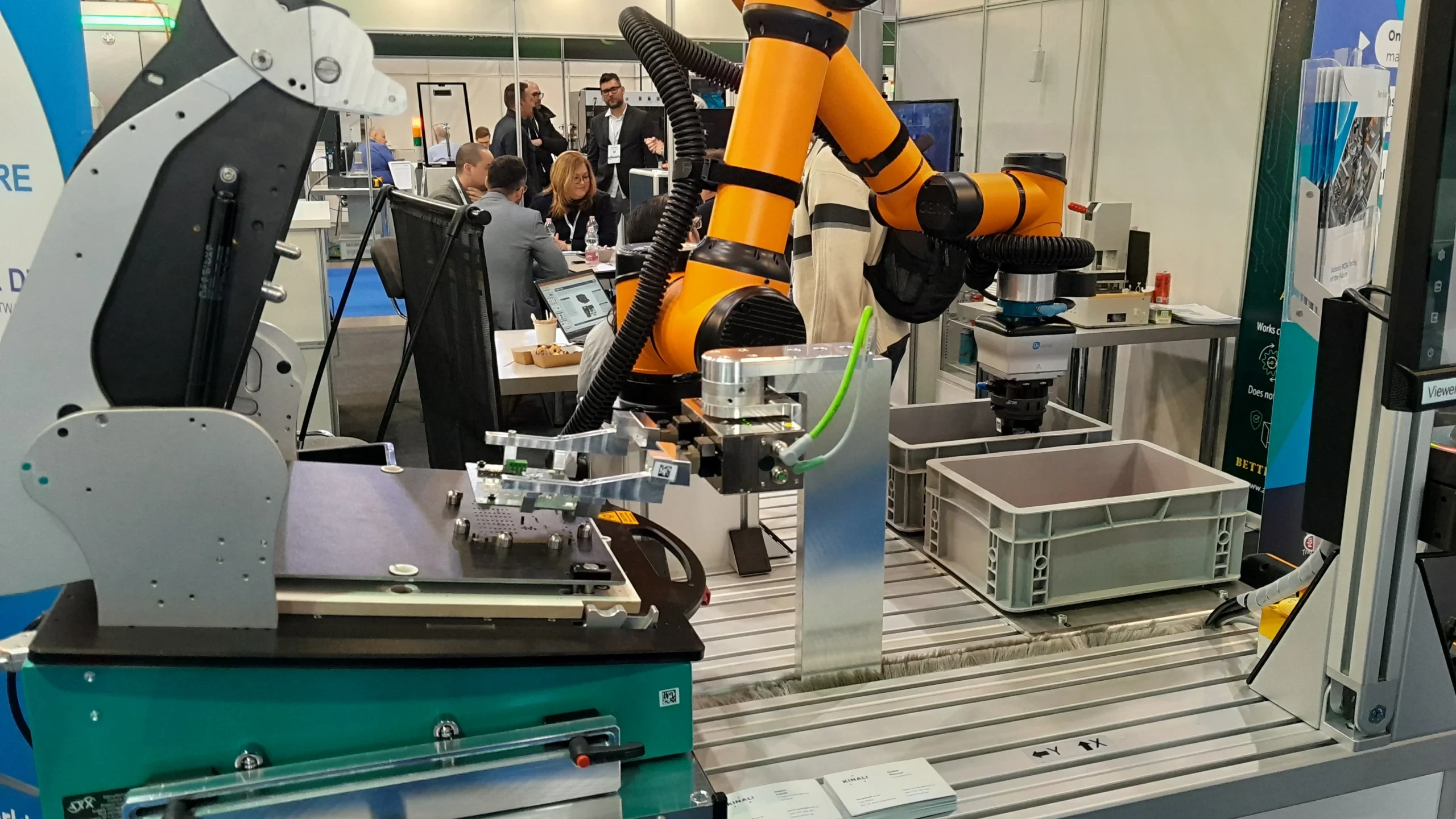
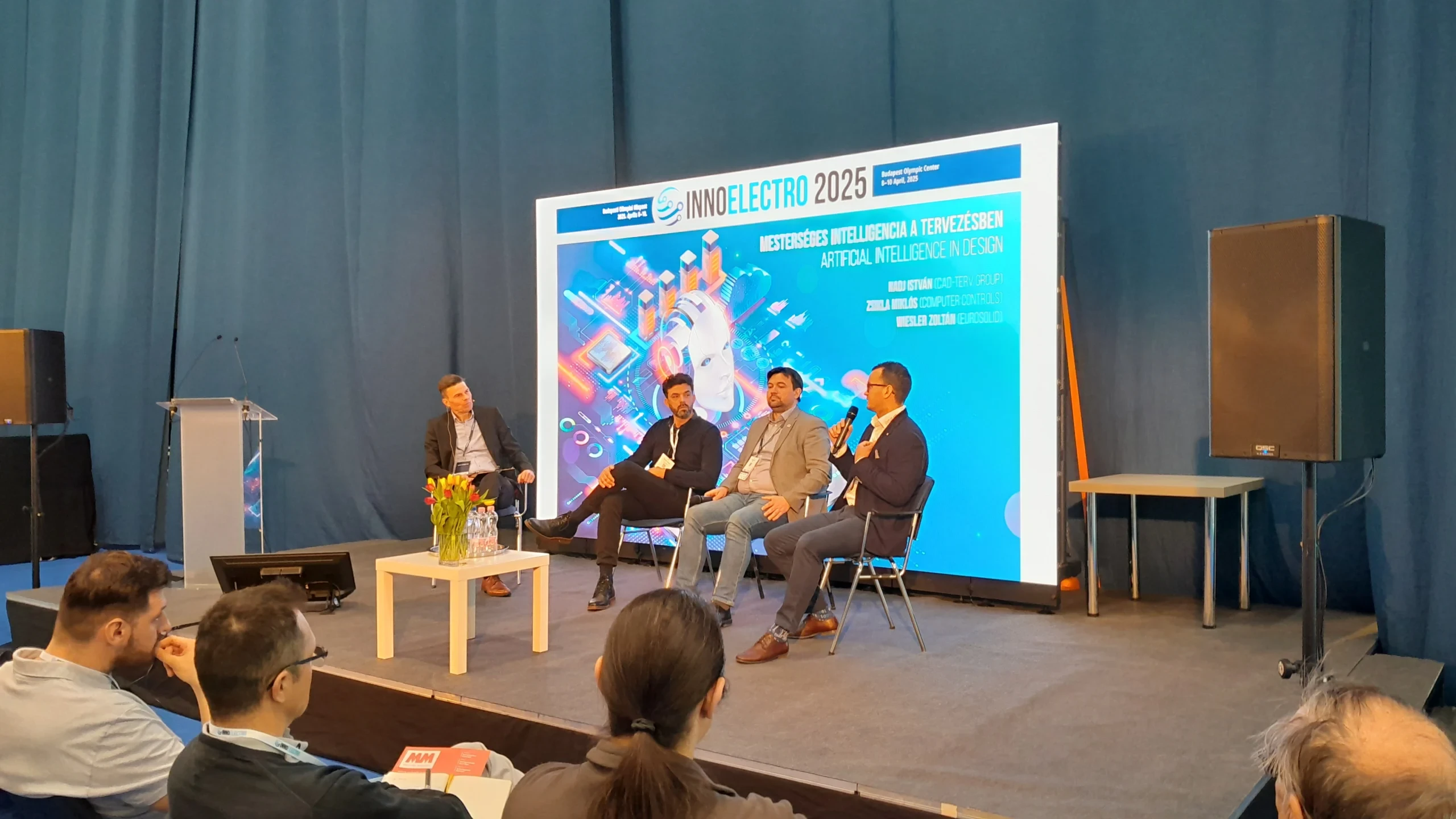
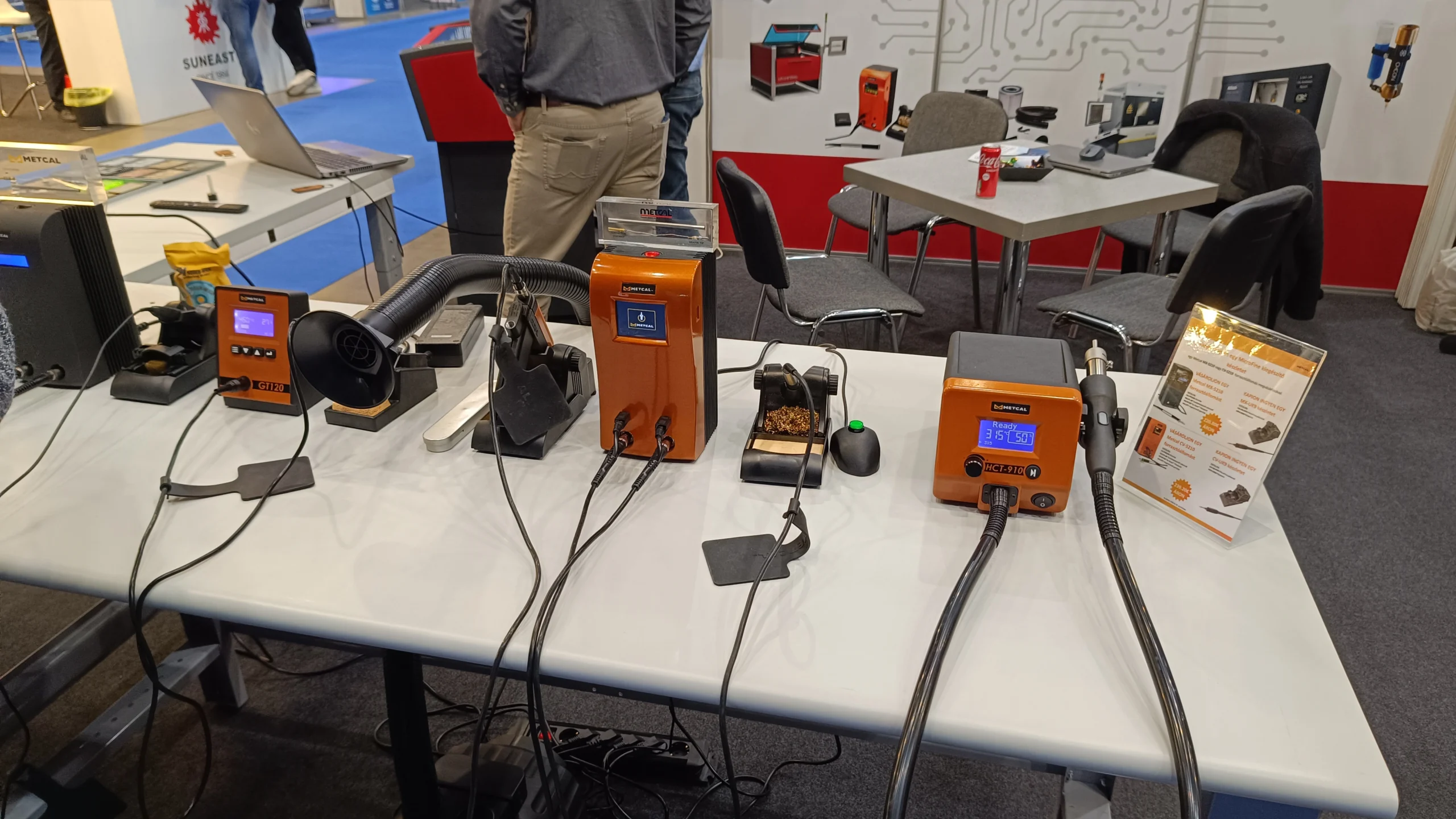
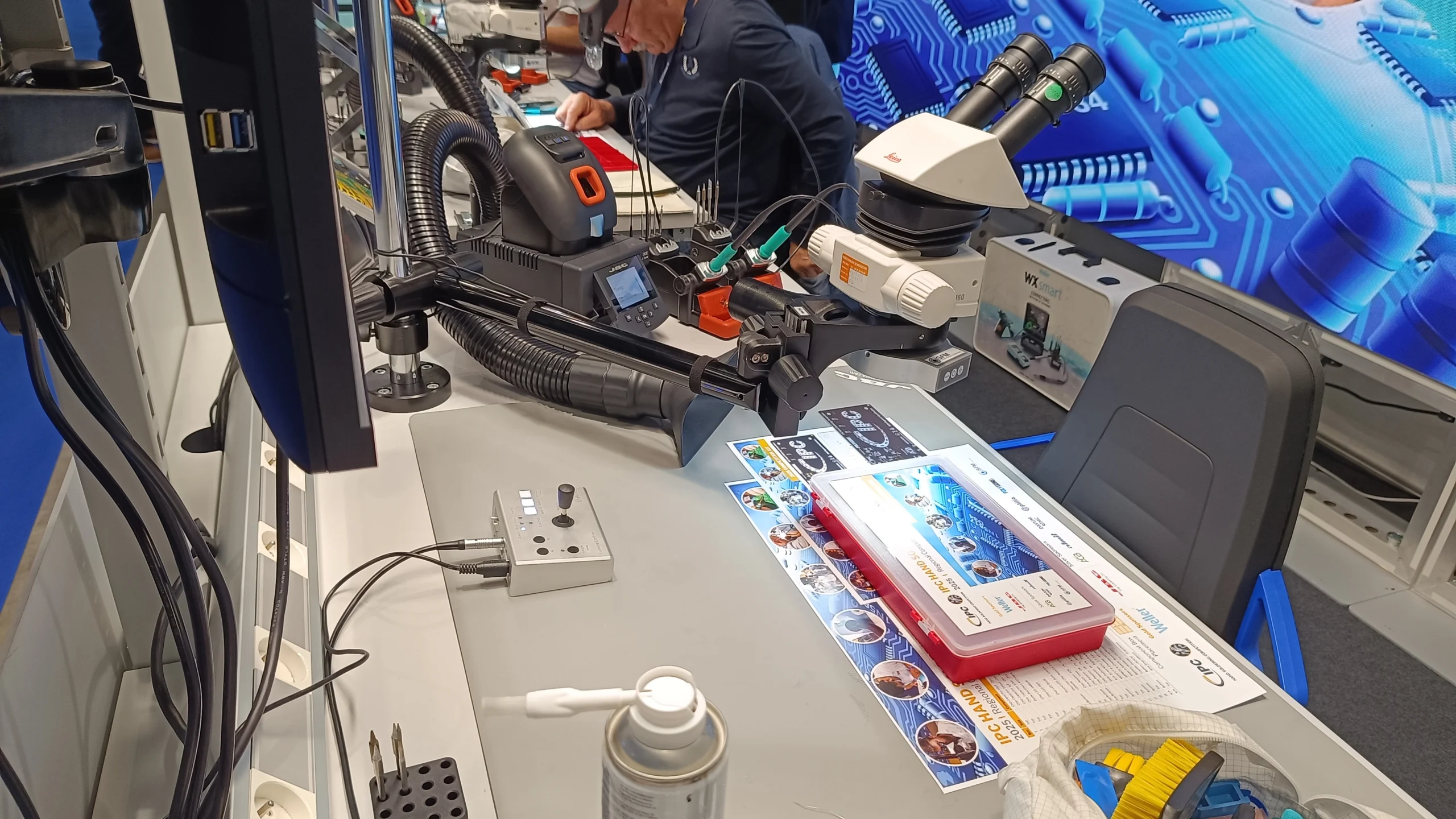
InnoElectro 2025 has once again confirmed its role as one of the most important industrial meeting places in the region. The wide spectrum of technologies and solutions presented illustrated the evolution of the electronics industry, with a focus on automation, reliable quality control and new types of integrated systems.
If you’re interested in these trends or have questions about a specific technology solution, we’re happy to discuss our experience. Contact us at one of our contact details!
Embedded World 2025
Embedded World 2025 – Insights and Experiences
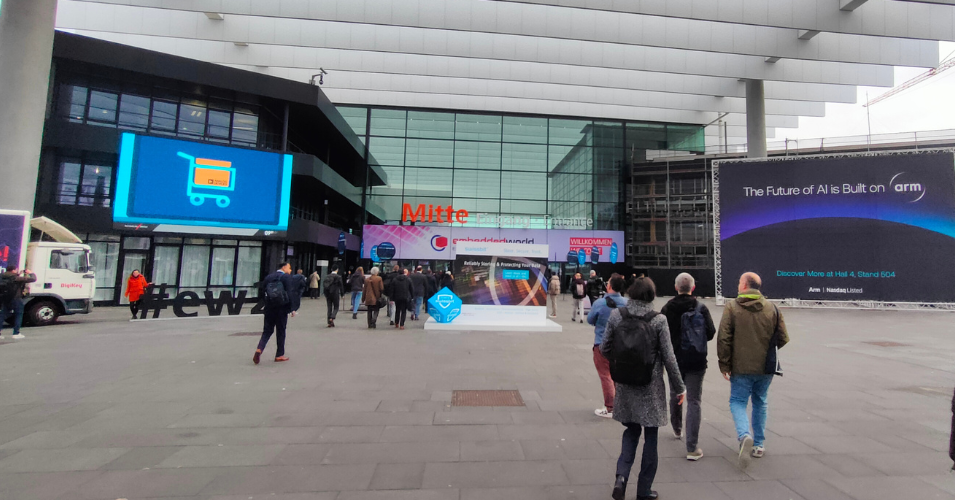
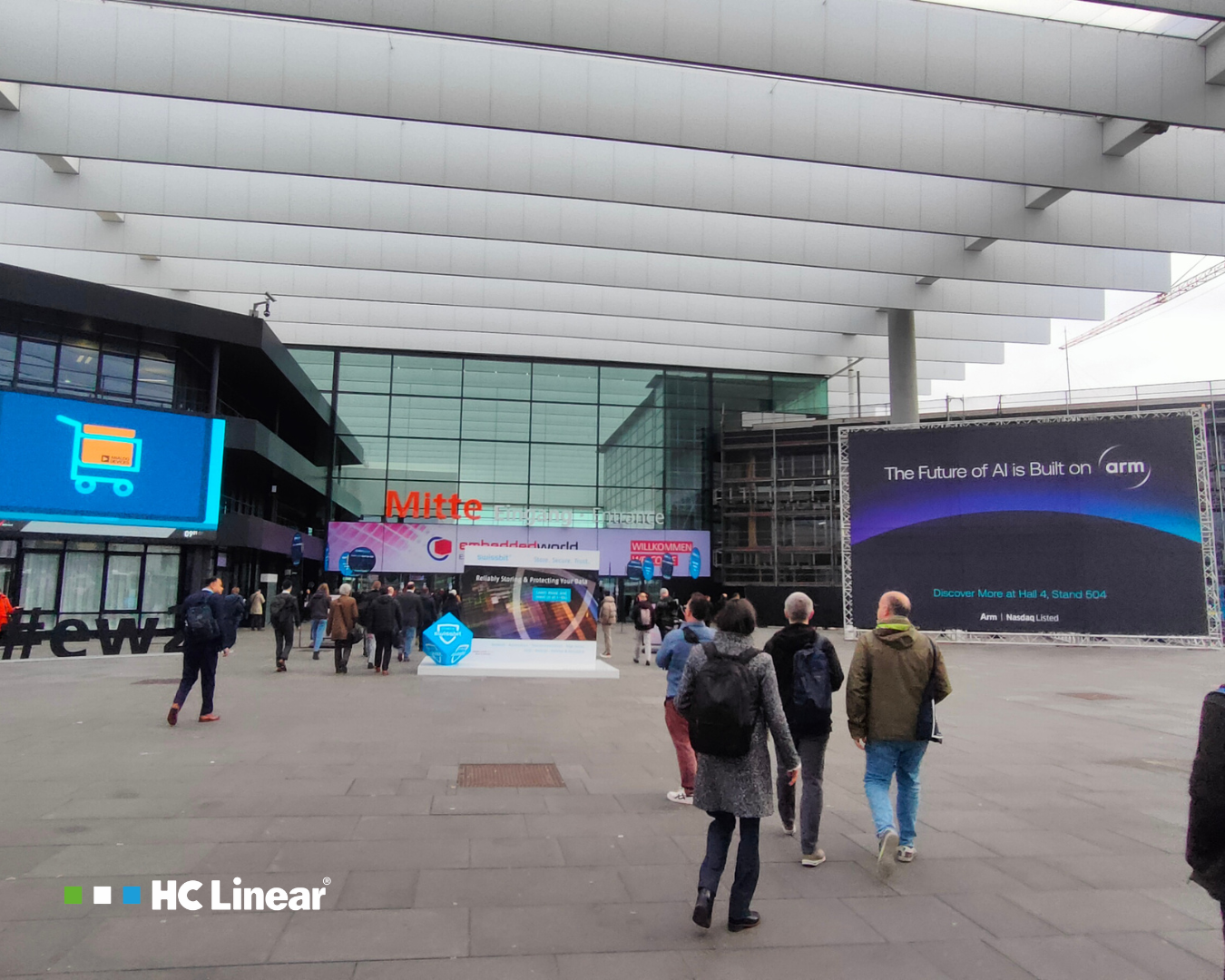
The embedded systems industry is evolving at an incredible pace, making it essential to stay ahead of the latest technological advancements. This year’s Embedded World, held in Nuremberg from March 11–13, once again proved to be a key event for the sector, attracting professionals from around the world.
A Hub for Industry Professionals
With over 32,000 attendees from 80 countries, the event highlighted the strong international interest in embedded technology. Our development engineers at HC Linear Ltd. were on-site to explore the latest trends firsthand and exchange insights with industry experts.
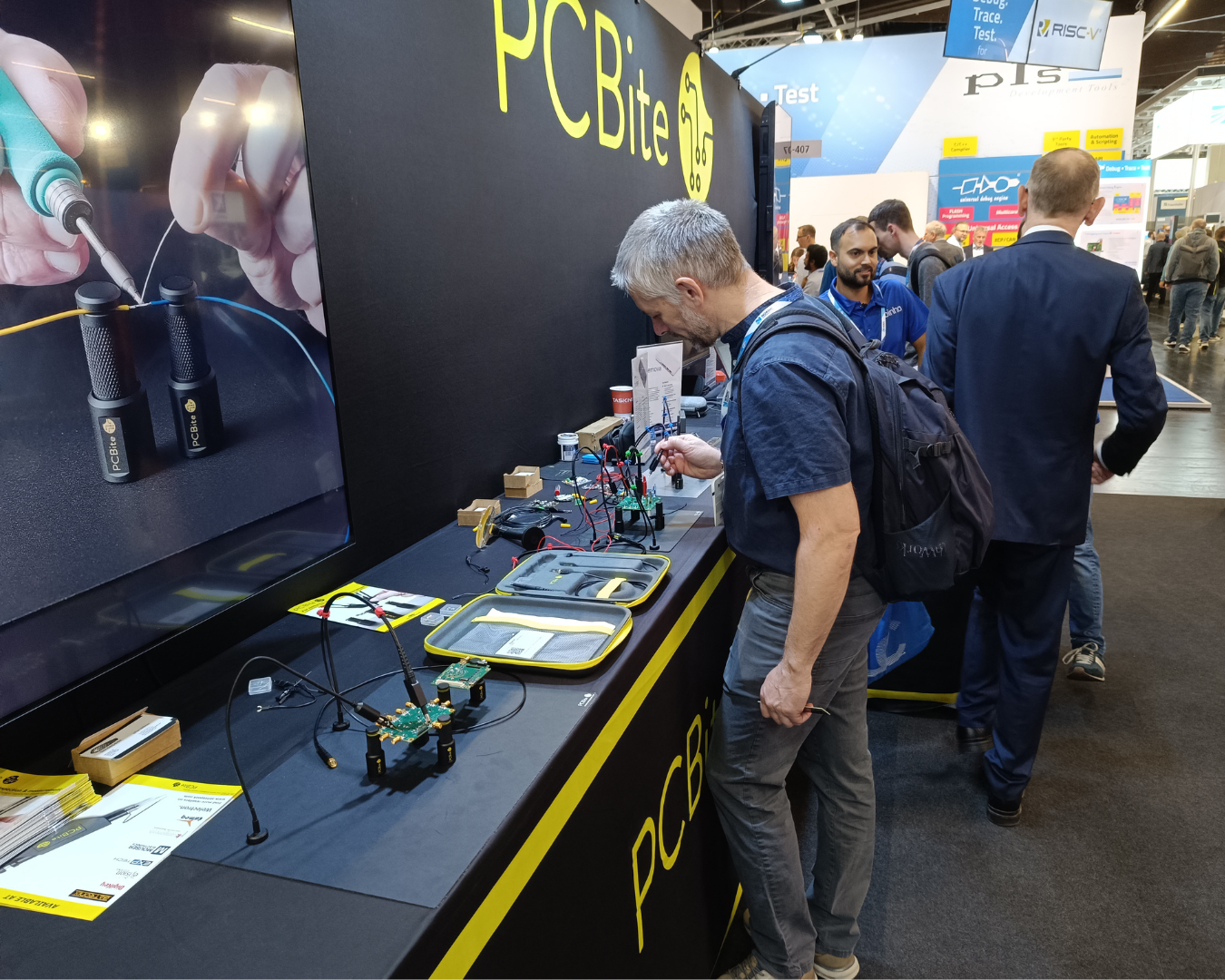
We took the opportunity to visit several of our partners’ booths, learning about their newest products and developments while discussing key technical questions. The event also provided an excellent platform to forge new business relationships and potential collaborations.
Key Trends: AI and Security in Embedded Systems
This year’s exhibition featured cutting-edge innovations in WiFi 6 and Bluetooth 5.2 technology, with Panasonic Industry’s booth standing out for its demonstrations of Matter and PanMaX services alongside their WiFi 6 modules.
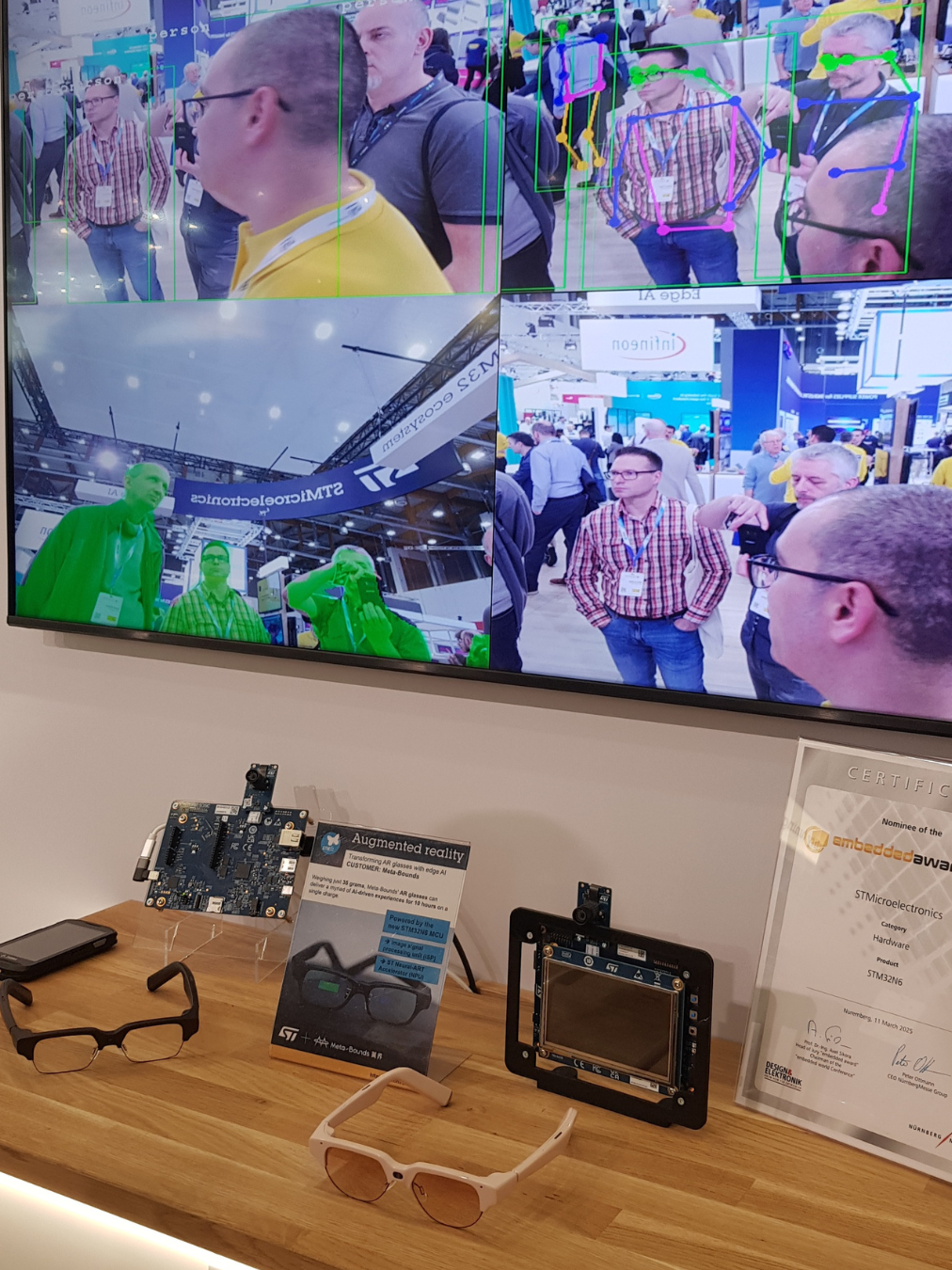
Two major conferences complemented the exhibition: the Embedded World Conference and the Electronic Displays Conference. With over 200 hours of expert-led sessions, these forums delved into the latest advancements shaping the industry. A key focus was the integration of AI and machine learning into embedded systems, unlocking new possibilities in real-time data processing and decision-making.
Cybersecurity was another hot topic, with companies showcasing advanced hardware and software security solutions designed to protect systems from cyber threats and ensure data integrity. Given the increasing emphasis on security from our customers, these developments are particularly relevant for us.
Celebrating Innovation – The Embedded Award 2025
One of the event’s highlights was the Embedded Award 2025, recognizing groundbreaking innovations across nine categories. Some standout winners included:
- AI & Machine Learning: Ambiq‘s heartKIT™, an ultra-low-power AI-powered heart monitoring solution for battery-operated devices.
- Hardware: Cadence Design Systems’ Base System Chiplet, showcasing the advantages of chiplet-based architectures over traditional SoCs.
- Embedded Vision: Team Group Inc.’s D500R WORM SD / microSD cards, offering state-of-the-art data protection features.
Embedded World 2025 provided us with valuable insights into the future of embedded technology, reinforcing the importance of innovation, security, and efficiency. It was a fantastic opportunity to deepen professional connections and explore cutting-edge solutions that could shape the next generation of embedded systems.
Want to learn more about how these technologies can be applied in real-world scenarios?
Let’s connect!